Ale Camacho

Ale Camacho

Ale Camacho — Sculpture, light and moving image

  1. 01Spring. 2022
  2. 02Magnolia. 2023
  3. 03God’s Speck. 2024
  4. 04Light from the Cleft. 2024
  5. 05Clearings of the Field. 2024
  6. 06Vacant Lot. 2025
  7. 07I don’t know what Julia is, I don’t know what Martina is. 2025
  8. 08One Day Alive After Death. 2025
  9. 09Metal-Muscle-Memory. 2025

When invisible comes visible, when time halts, and what seemed to be in motion is suspended.

9 works 2022—2025

01 2022

Spring

10 × 22 cm Bronze sculpture

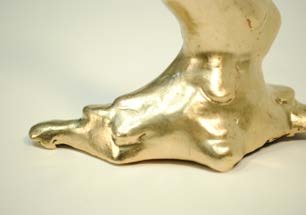
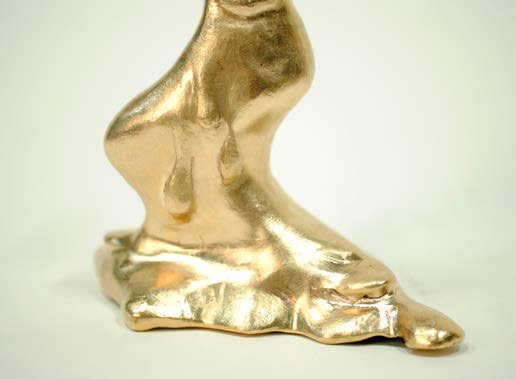
Spring is a polished bronze sculpture in which a drop of water rises from the Earth. This drop, which would normally descend, here ascends, breaking with the logic of continuous flow, as if emerging from the very heart of the Earth, like an invisible spring finding its way into the visible. In this ascent, the work symbolizes creation, the birth of what was once hidden, in an act of transformation and revelation.

Spring refers both to the season of spring and to the idea of a spring that springs from earth, the rebirth of nature, something that emerges forcefully from deep within. Suspended in its upward movement, it reflects not only the fragility of the drop but also the intensity of each moment, as a break with the traditional occidental view of time. Instead of being a continuous line, time becomes a series of energetic moments. In The Order Of Time, Carlo Rovelli argues that time is made up of a network of events that, by intertwining, create an experience of time that seems continuous.

Water is not just a physical substance, but a symbol of renaissance, revival, imagination, life. Bachelard refers to water as both a source of imagination and unconscious thought, a force that shapes our dreams and our connection to the natural world.
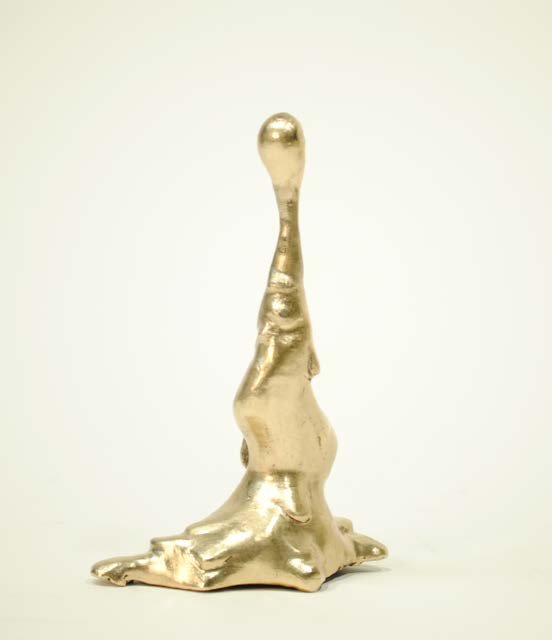
Spring, polished bronze: a drop of water rising from the ground.
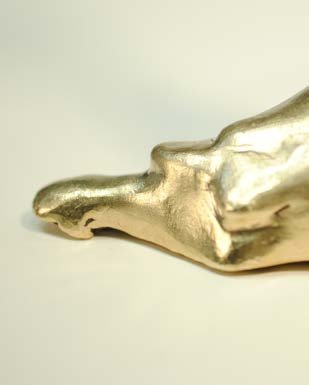
Spring lying down, catching the light along its edge.
Spring — 2022
Detail of the bronze base, where the drop meets the ground.
Spring in profile, the drop suspended at its highest point.

Spring 2022 10 × 22 cm Bronze sculpture
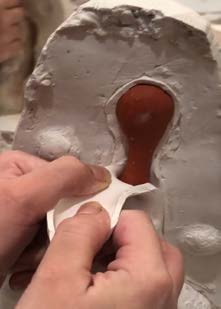
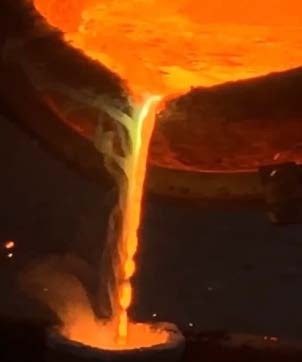
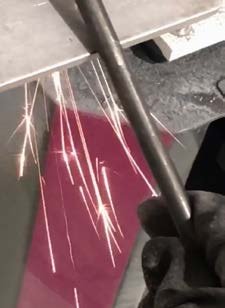
The workshop Bronze casting
The wax model being carved before casting.
Molten bronze pouring into the mould.
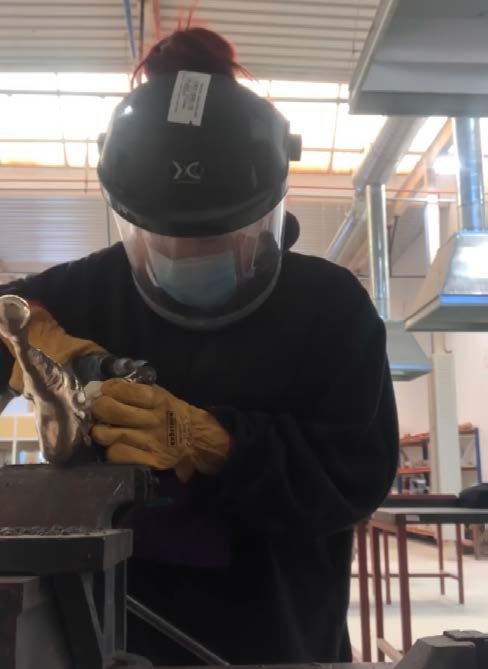
Sparks from the grinder against the raw cast.
Ale Camacho polishing the piece in the foundry.

Spring invites reflection on the relationship between matter and essence, between past and future, between what is visible and what remains hidden.

Instead of being a continuous line, time becomes a series of energetic moments.
Carlo Rovelli The Order of Time
02 2023

Magnolia

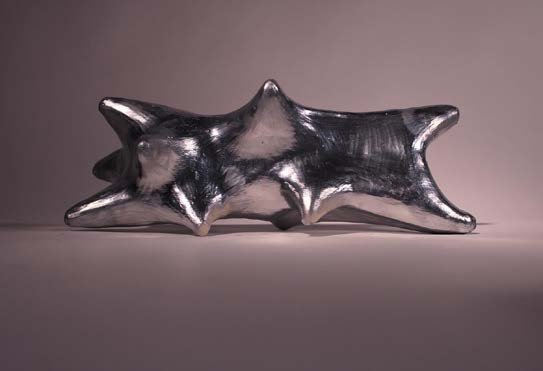
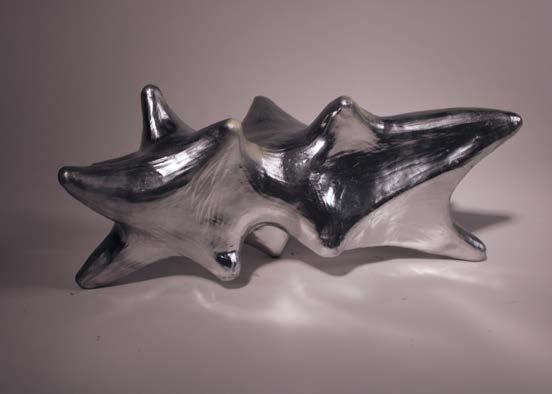
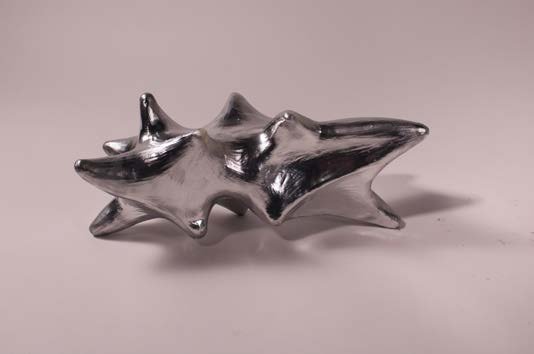
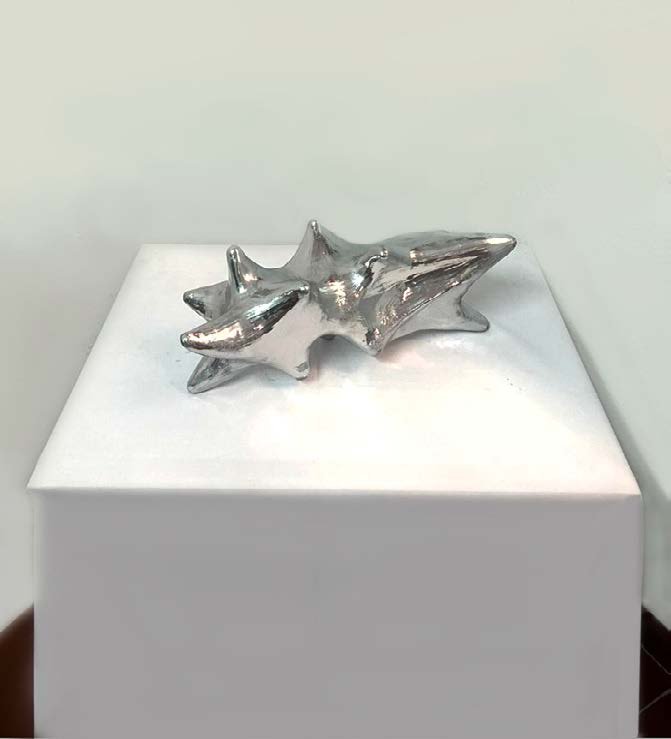
14 × 38 cm Metalized ceramic

The conception of the technological and the organic as opposites has traditionally defined our relationship with nature and machinery. However, as we delve into the complexities of contemporary society, this dichotomy begins to blur, revealing an intersection where the artificial and the natural merge, creating new aesthetic and existential realities. Technology is no longer just a functional tool, but an aesthetic entity that not only imitates the beauty of nature, but transcends it, transforming into an autonomous and complex form of art.

William Gibson takes this idea further by creating a world where the metallic and the biological coexist, with technology becoming an organic element in itself. In this universe, the machine is an extension of the human body, an artifact that emanates beauty almost organically.

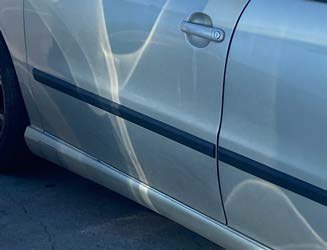
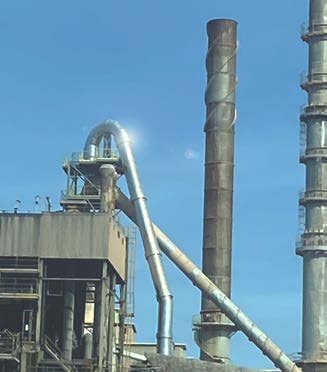
The flank of a car, shine bent along the metal. Industrial chimneys against a flat blue sky.
The mirage of shine — found images
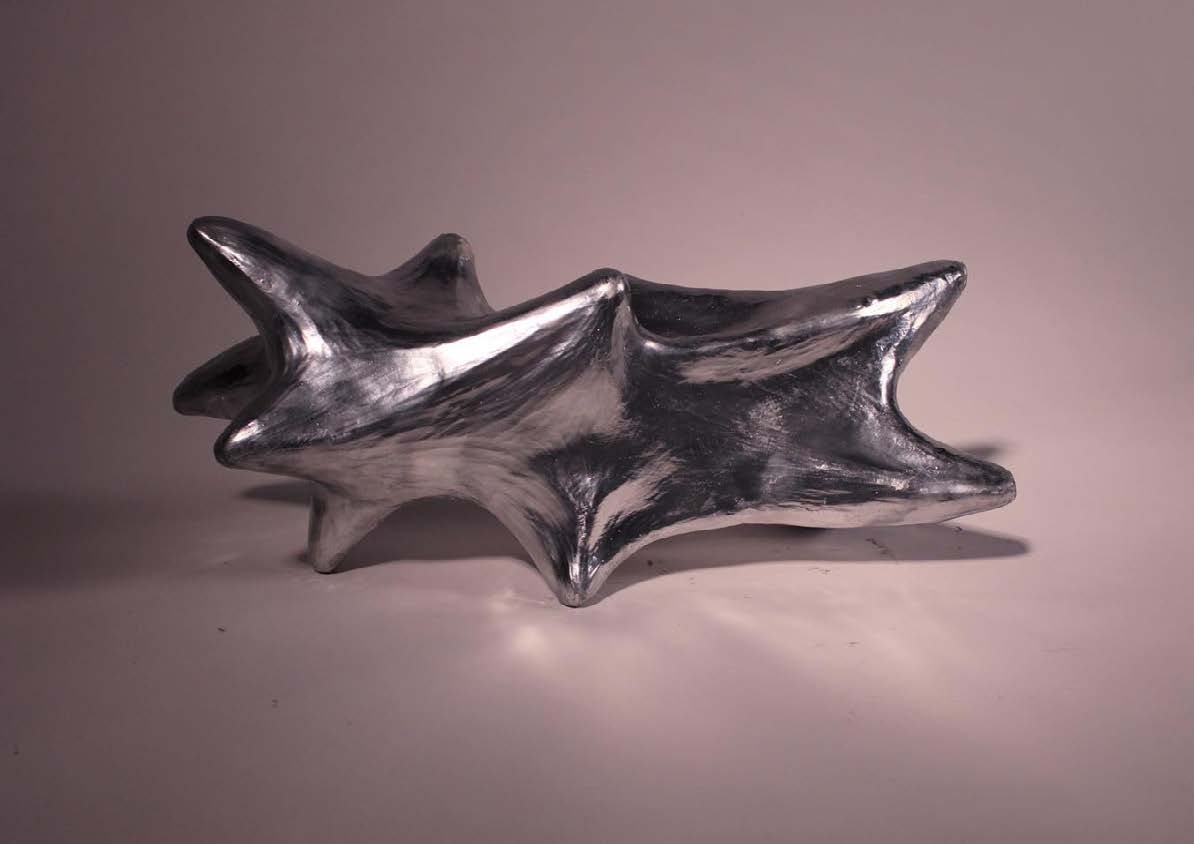
Magnolia, metalized ceramic, turning across its four sides.

Side 1 / 4

Magnolia 2023 14 × 38 cm Metalized ceramic

Magnolia resting on a white plinth.
Magnolia — 2023
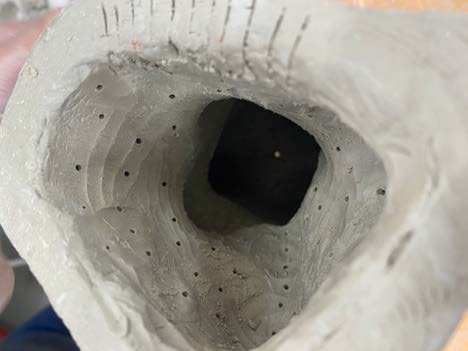
The hollow interior of the ceramic piece.
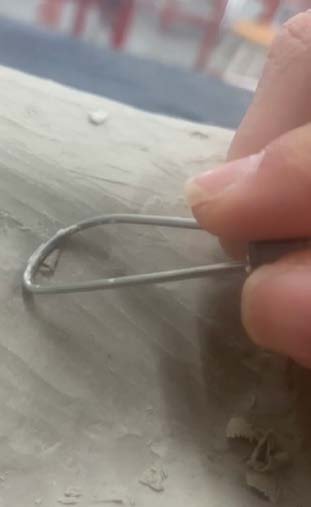
A wire tool shaping the still-wet clay.
The mirage of shine is both dazzling and deceptive, revealing a fractured aesthetic where the distinction between the natural and the artificial fades.
Ale Camacho
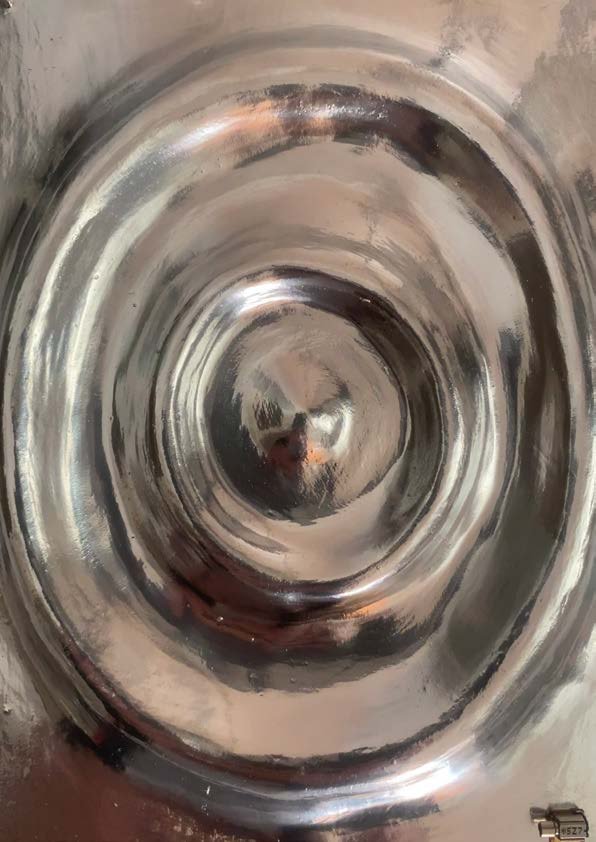
Concentric waves in metalized ceramic, seen from above.

Sister piece 2023

No title

8 × 14 cm Metalized ceramic and the vibration micro motor of a mobile phone

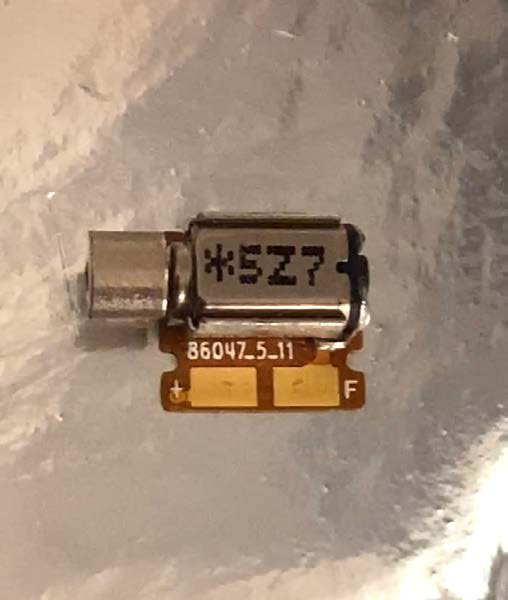
While researching the components found in a smartphone, I came across a specific part: the vibration micro motor. The sculpture is conceived based on the research of the expansive wave created in water by the vibration when a drop falls onto its surface.

The waves are the result of vibrations that are transmitted through the water, and the energy of the falling drop is transformed into the movement of the water molecules, creating the visible waves on the surface.

The vibration micro motor of a mobile phone, on the raw ceramic.
The vibration micro motor, taken from a smartphone

03 2024

God’s Speck

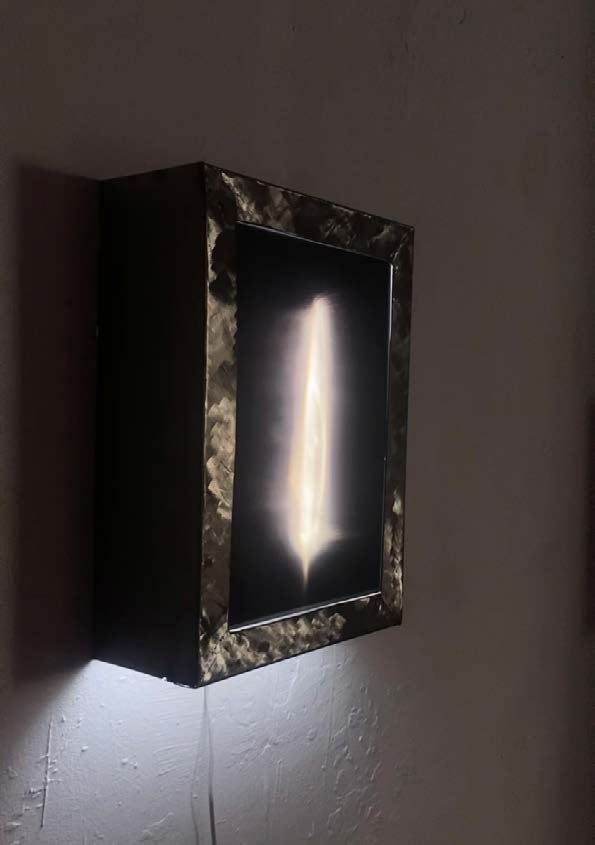
8 × 14 cm Metal lightbox, acetates and light bulb

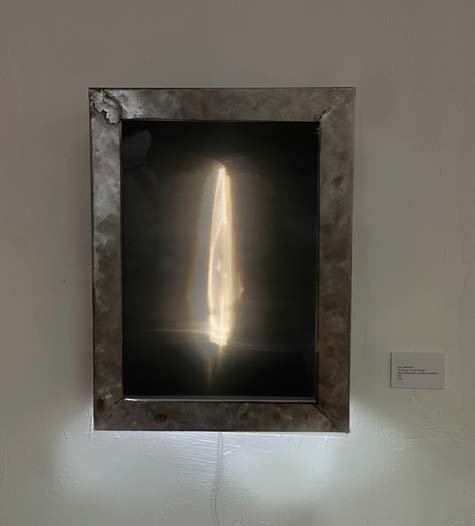
The metal lightbox mounted on a wall, lit from within.
The lightbox, lit, on the wall
The lightbox seen at an angle, its edge catching the light.

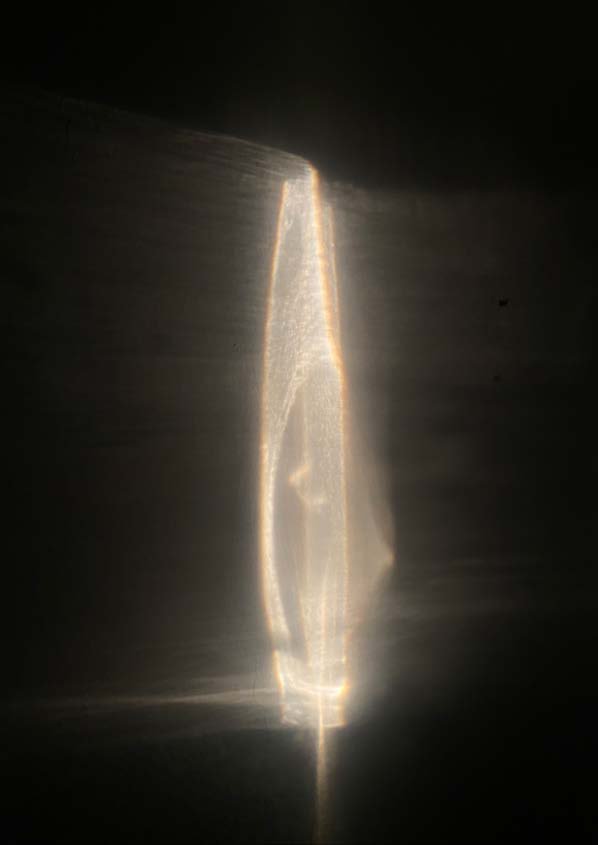
These acetates contain printed images that capture the moment when the light from a flashlight reflects on the wall; this light is refracted through a glass of water and crystals. The printed acetates are superimposed to create a certain illusion of three-dimensionality.

Water becomes a medium through which light reveals its mystical and transformative nature. In my work, I like to constantly bring in the following idea: the beauty of the artificial can resemble the natural beauty of the organic, and both elements can coexist in harmony.

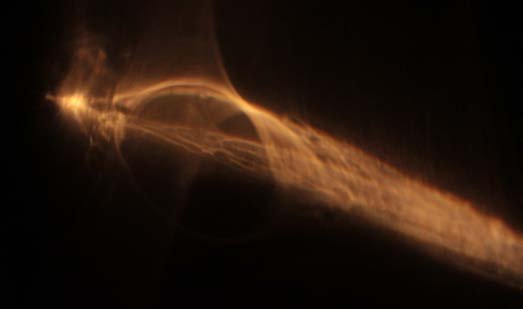
A vertical blade of light, refracted through water and glass.

“God’s Speck” emerges from a reflection on essence and appearance, the hidden and the revealed, transforming into something sacred. There are moments when certain lights and shadows align with our perspective, allowing glimpses of other realities, a world with a different order and different laws. These are instances where everything seems to come together, mental images captured by the urge to hold onto a moment where it feels like more has happened than in weeks or months.

This piece also delves into the concept of time, one of its main elements. Ludwig Boltzmann understood that the behavior of heat can be interpreted in terms of a blur, due to the sea of microscopic variables in a glass of water that we do not see. The number of possible microscopic configurations of water is entropy. This very blur determines a concrete variable: time.

According to Boltzmann, “Time” is what we have invented to try to explain everything that escapes our macroscopic understanding.

God’s Speck 2024 16 × 29 cm Inkjet print on photo paper, edition of 3

God’s Speck, first of three photographs: light folded like a wing.
1/3
God’s Speck, second of three: the light opens into a crown.
2/3
God’s Speck, third of three: the light stretches and thins out.
3/3

Light refracts, changing direction at the point of contact with water. One could say that water is its vehicle, displacing it and transforming it into something different. Beneath the water, everything moves more slowly; there is a different speed, a different order.

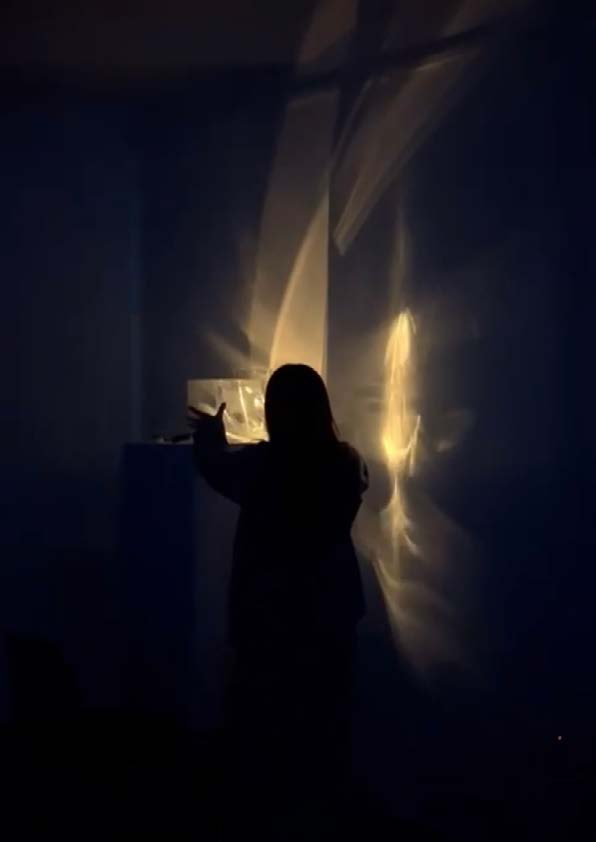
The artist standing before the refracted light on the wall.
It is a light so different from the light here, that the brightness of the sun we see seems dull beside it.
Teresa de Jesús — The Book of Her Life (28, 3–5)

04 2024

Light from the Cleft

Liquid crystal from an LCD screen, and light source

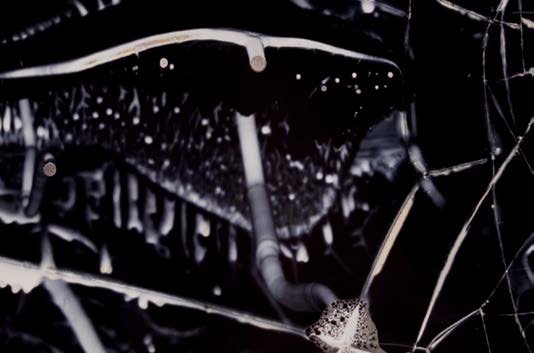
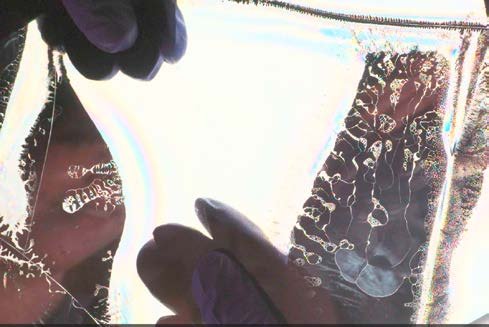
Broken liquid crystal, pixels bleeding into colour.

Exploring the different components inside a broken PC screen, I noticed that the dark spot on the broken screen moved and expanded depending on the pressure applied. That’s when I collected 20 broken LCD screens from various computer stores and began investigating this.

Liquid crystals are substances that share characteristics of both liquids and solids. In a liquid, all the molecules move in a disordered manner without a fixed position. However, in liquid crystals, the molecules maintain a specific orientation, similar to that of a crystal, although they can still flow like a liquid. They are in an intermediate state between solid and liquid.

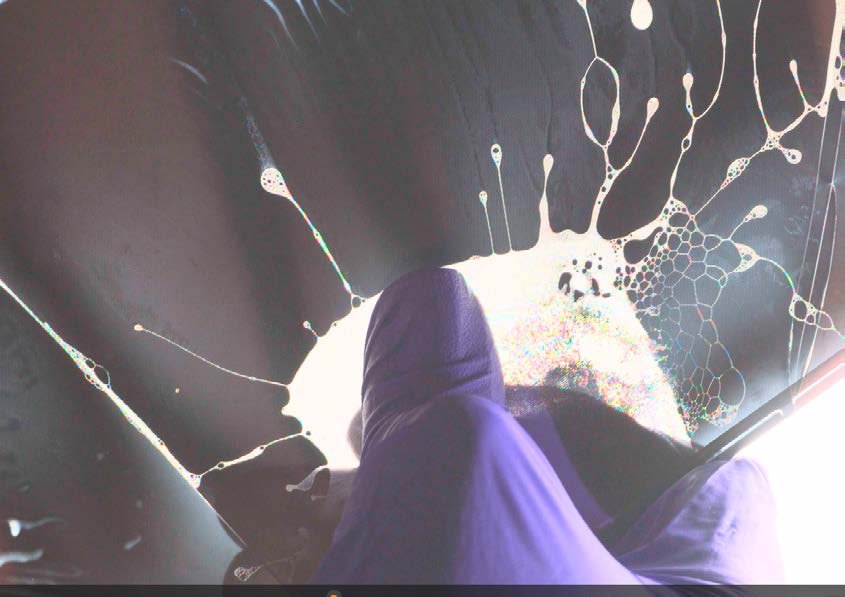
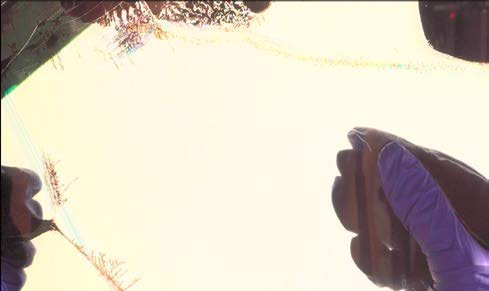
Liquid crystal spreading in violet under the pressure of a hand.
Liquid crystal released under pressure
The fracture Metamorphosis — 2024
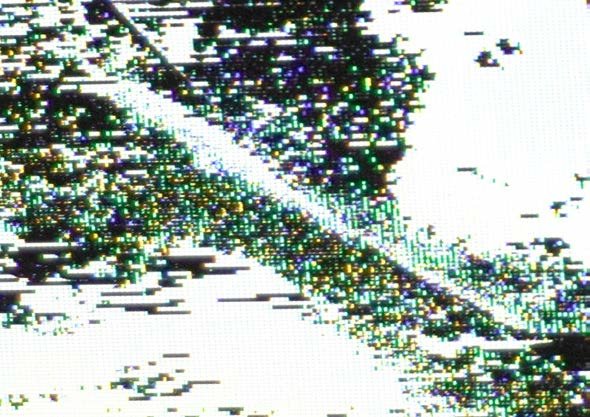
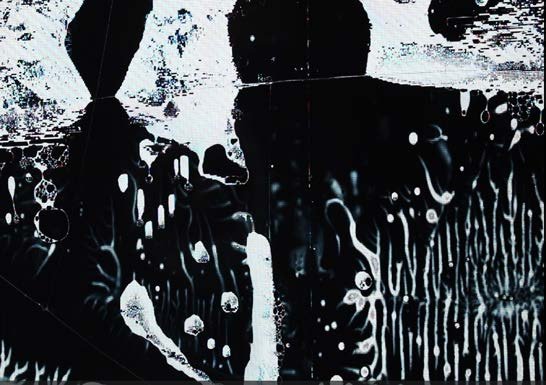
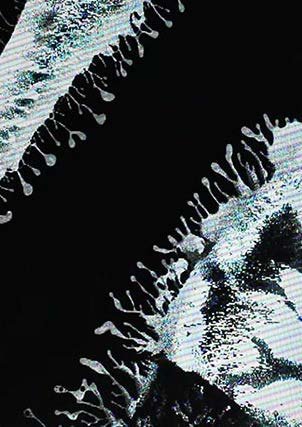
The fracture pattern of a liquid crystal, in black and white.

When you break a liquid crystal, it shatters into small fragments rather than breaking into large pieces like a solid crystal. When they break, liquid crystals release the energy stored in their molecular structure, which can result in a characteristic fracture pattern and the release of heat. Additionally, the resulting fragments can align in specific orientations due to the crystalline structure.

Also, as a result of the breakage, the behavior of the pixels can become unpredictable. The crystals can become misaligned and behave irregularly. The pixels may not control the light correctly, resulting in distorted colors or smudges.

Gloved hands pulling apart the layers of a broken screen.

In the video, the light reveals itself through the fracture, generating different shapes. To seek beauty in error. To give technology a different use, recognizing it as part of us. In technology, we can see an infinite number of patterns inherent to nature.

Watch the piece
To seek beauty in error.
Ale Camacho

05 2024

Clearings of the Field

Documentary video and 10 photographs Valle de Los Pedroches, Córdoba

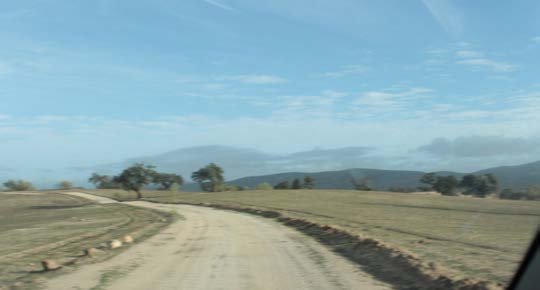
A documentary video about the daily life of a young cattle rancher in the Valle de los Pedroches, Córdoba. I delved into his routine, his customs, his work, his way of speaking and thinking, his reflections on his job, the countryside, and society.

For me, it was very important to see firsthand what life is like working in the primary sector in Spain, and to be able to share it. Gonzalo emphasizes the urgency of reconciling with nature and rejecting any exploitative relationship with it, aiming for a certain symbiosis.

Watch the documentary
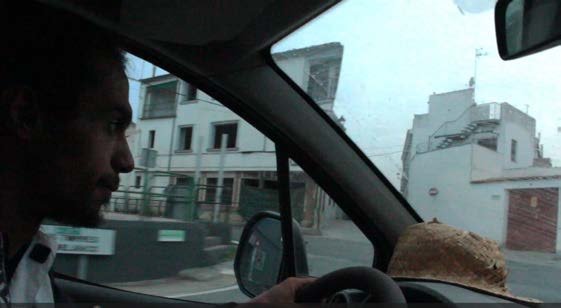
Gonzalo driving, seen from the passenger seat.
Gonzalo, cattle rancher
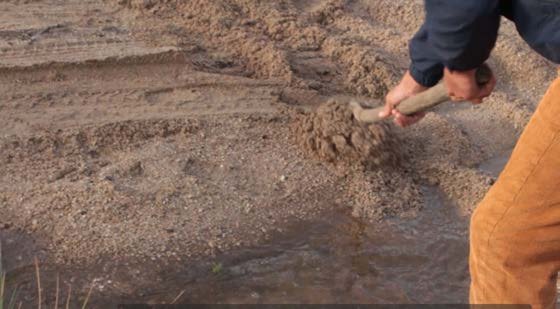
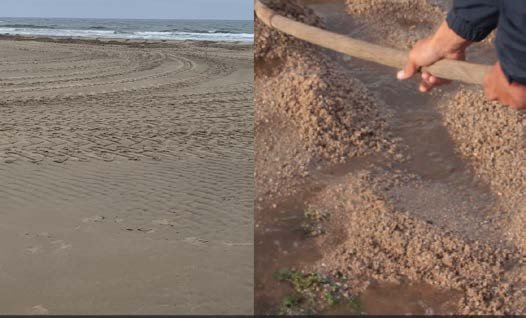
Hands moving earth with a rake beside the water.

Clearings of the Field 2024 25 × 44,51 cm 10 photographs, inkjet on paper

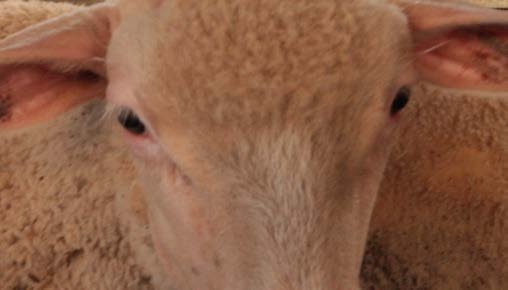
Series: sheep pressed together, numbers marked on their wool.
1/10
2/10
3/10
4/10
5/10
6/10
7/10
8/10
9/10
10/10

06 2025

Vacant Lot

14,85 × 21 cm Fanzine

Currently, we have become producers during our leisure time and through consumption, turning the cycles of rest and work into a vicious circle: producing to consume and consuming to produce. Leisure time ends up being a direct configuration of work. We have become machines; we only conceive “being” by doing, producing, consuming.

In fallow land, I explore the communication and concept of “being”. Being, not doing. Being, not interpreting. Being, not reacting. Being, not identifying. Is it possible to be without doing? Can one rest without continuing to produce? Can one be without seeking a goal or benefit? What am I when I do none of that? I am a manifestation of freedom.

Being, not doing.

Time discarded for the system, reclaimed for oneself
Fallow

Fallow: 1. adj. Said of the land: that it is not plowed or grazed. Syn.: barren, uncultivated, sterile, desolate, infertile, unproductive. Ant.: cultivated. 3. adj. Vain, without reason or foundation. Syn.: useless, futile, fruitless, idle. 4. adj. Vagrant, lost, without occupation or trade.

A field where nothing is produced is a useless, futile field… How can a fallow land be useless? I think the question is: for whom is it useless? They are what they are and nothing else.

Fallow Land 2025 14,85 × 21 cm Fanzine

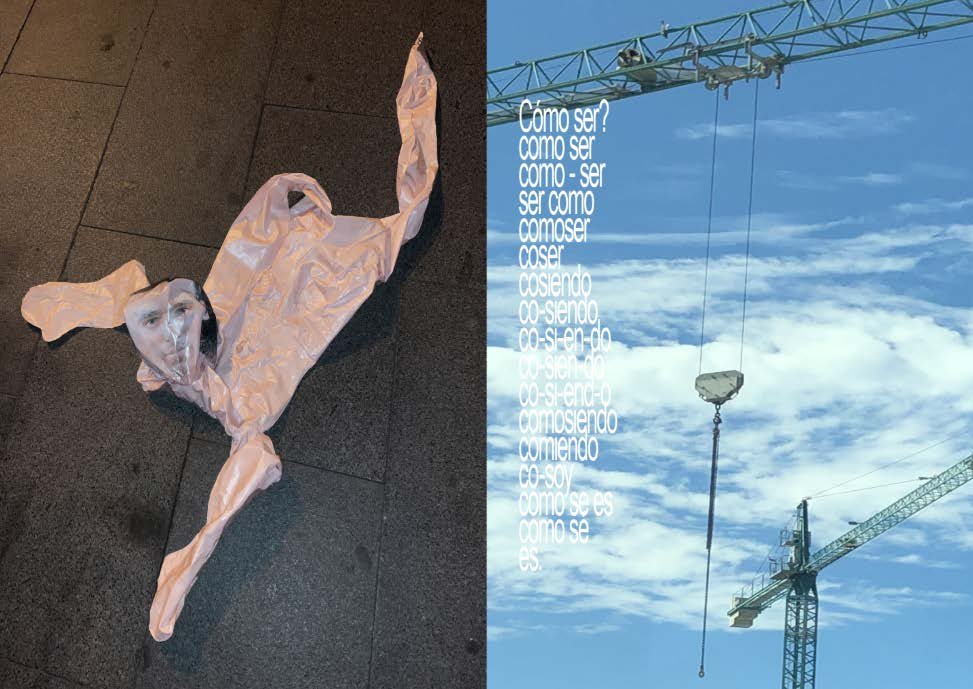
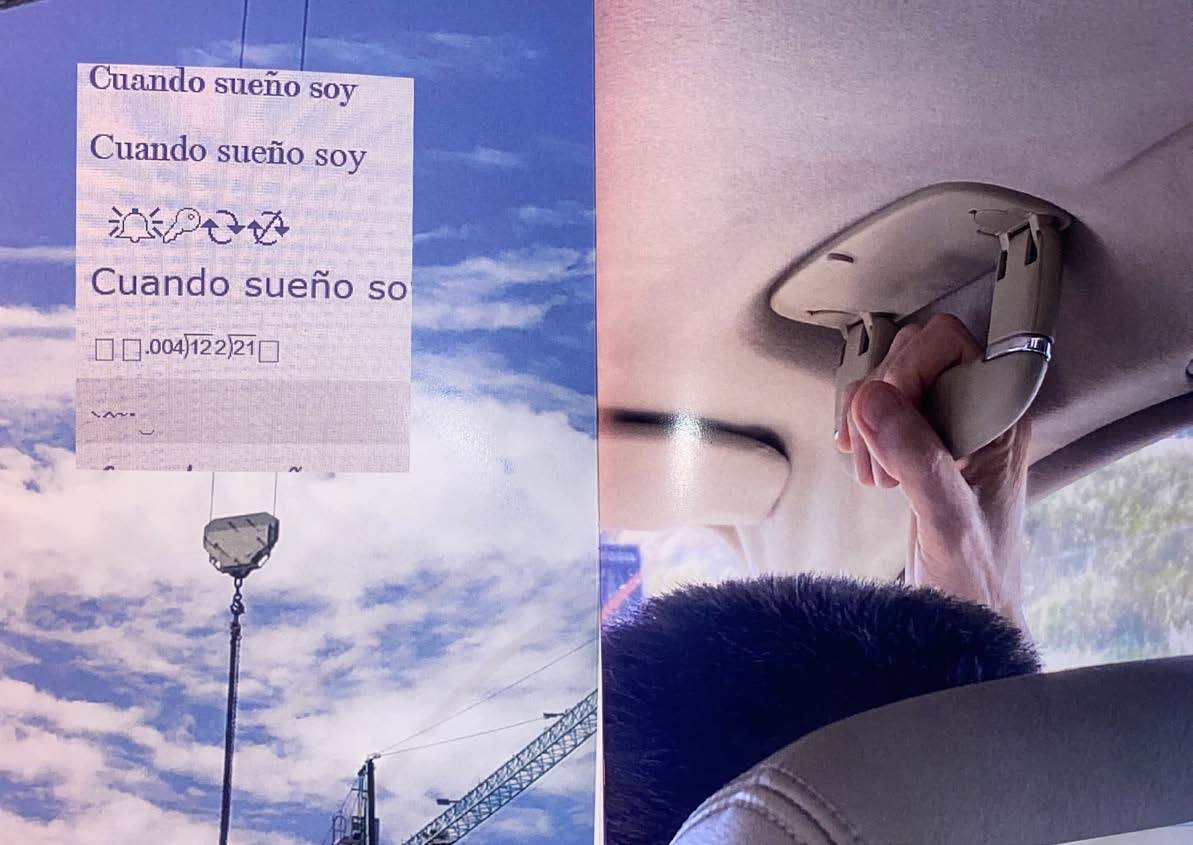
A printed sign against the sky: “Cuando sueño soy”.
“I dreamed that I said I am and it was understood”
Spreads from the fanzine, pipes and printed text.
A crane against clouds, with the word “ser” broken across the sky.
Language is like a cup of tea; everything that overflows, everything else, is the world, reality.
Ludwig Wittgenstein

07 2025

I don’t know what Julia is,
I don’t know what Martina is

2:48 Audiovisual piece

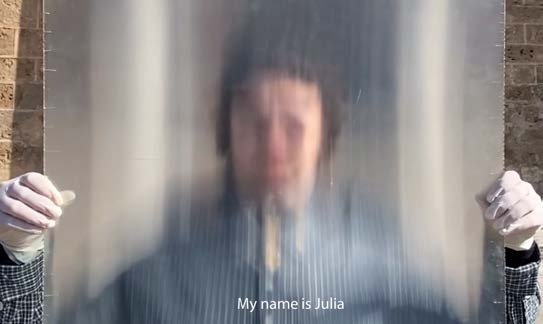
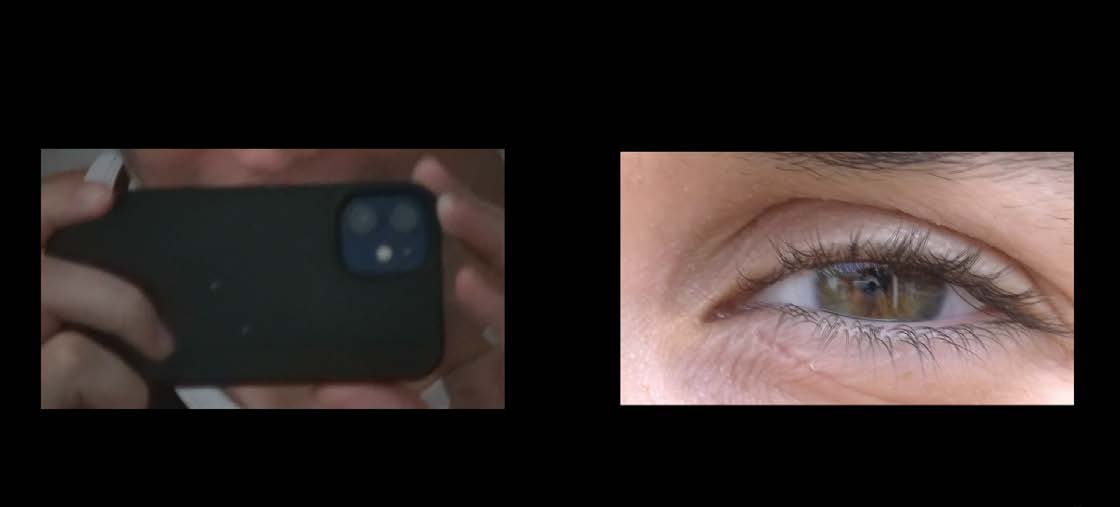
A blurred figure behind a curtain, subtitled “My name is Julia”.
“My name is Julia”

This piece emerged from exploring concepts such as language, human perception, identity, and the hybrid relationship between nature and technology. Instead of seeing these as opposites, I perceive them as interconnected systems in constant transformation. Through audiovisual experimentation, I investigate communication in its broadest sense, understanding it as an open and fluid system made up of infinite languages.

The video features three women: Laura, 25 years old, from Granada, Spain; Julia, 21 years old, from Poland; and Martina, 61 years old, from Germany. Recurrent fragments show a young girl walking through the forest with a doll, becoming a symbolic reflection of our human essence.

The voice, throughout the first part

Ant big as a dog, dog big as an ant.

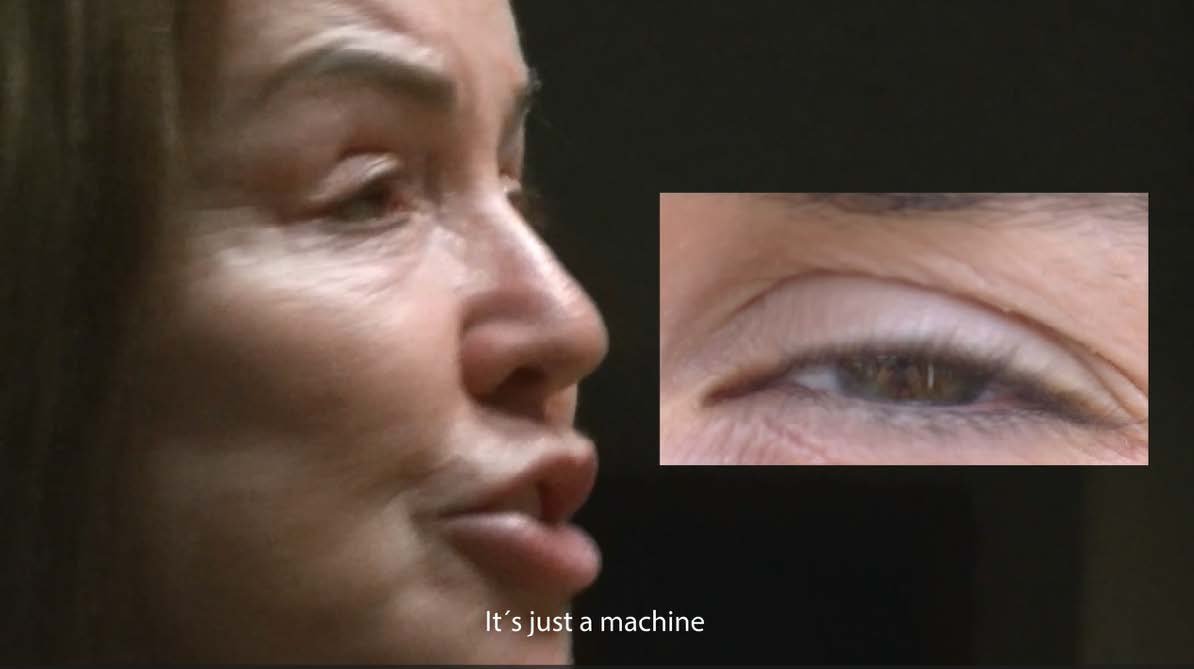
Martina in close-up, mid-sentence: “It’s just a machine”.

The video is composed of two parts: the first, an entry into this dreamlike world, the internal, the subconscious, and therefore a doorway to a reality where language is configured differently. The second and final part is the presentation of Julia and Martina, understanding the concept of “presentation” in an unconventional way: without defining, unfolding possibilities. It is an encounter with the undefined, an exploration of what it means to be seen and perceived.

Watch the piece

08 2025

One Day Alive After Death

2:00 Sound piece

Listen on SoundCloud

Two minutes. Headphones, if you can.

09 2025

Metal-Muscle-Memory

1:39 Video art

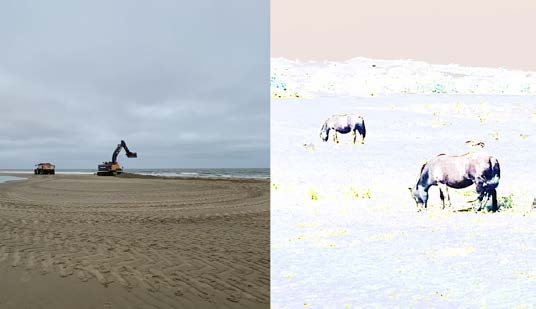
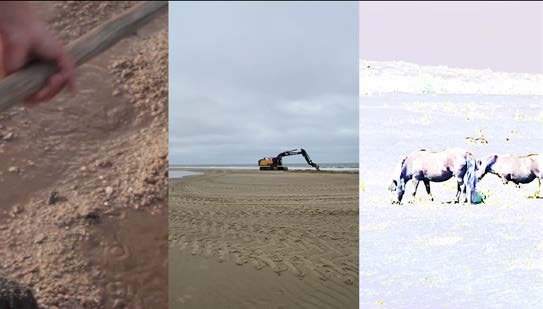
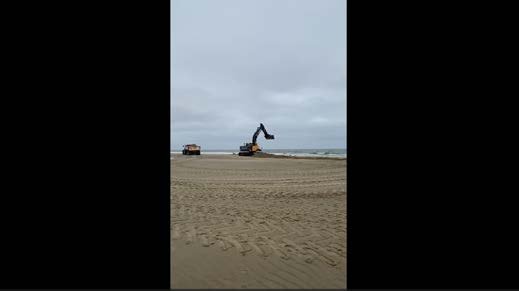
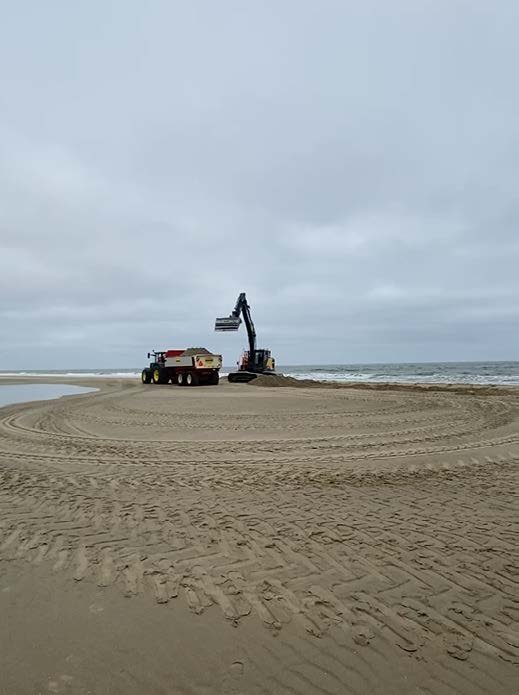
This video juxtaposes three distinct yet interconnected forms of landscape transformation carrying out the same action. I ask myself: from where do we do something? From the pursuit of efficiency, from necessity, from awareness and attention?

Through these layered actions — machine, body, animal — the work explores the hybrid relationship between nature and technology, and how perception constructs meaning from fragmented realities. Earth becomes a shared interface, a medium through which presence, consumption, and transformation are enacted.

  1. 01

    Plane 1 — Excavator. The action from efficiency.

  2. 02

    Plane 2 — Ponies grazing. The action from necessity, from instinct.

  3. 03

    Plane 3 — Arms moving earth with a rake. The action from attention.

  4. 04

    Plane 4 — All three at once.

Stills from the piece: the planes stacking up across the frame.
Stills from the edit, as the planes accumulate
An excavator on the shore, tracks drawn across the wet sand.

We inhabit a time in which being a producer and a consumer has become inseparable. Every moment — whether of work, leisure, or rest — is permeated by the logic of productivity. We no longer produce only in factories or studios; we produce content, presence, data, identity. We consume images, experiences, bodies, and simultaneously become material for consumption ourselves.

The editing unfolds in four phases, each governed by a logic of accumulation and superposition that transforms the viewer’s perception. In the final phase, all three planes coexist simultaneously on screen. The sound frequencies of each element overlap without losing their identity, generating a visual and auditory polyphony.

Watch the piece
From where do we act? From desire, necessity, habit, or programming?
Ale Camacho